

Why a Post-Flood Waterfront Inspection Matters
Flood damage is not always dramatic or immediately visible. A dock may still appear level from the shoreline even when hardware has loosened, a piling has shifted, or debris has become trapped beneath the structure.
Fast-moving water places pressure on every component it reaches. Floating logs and branches can strike dock supports, while smaller debris can collect against framing and create sustained lateral pressure. Sediment may also settle around ladders, intake equipment, boat slips, and shoreline structures.
Before allowing children, guests, pets, or watercraft back onto the waterfront, work through the property systematically.
1. Look at the Dock Before Walking Onto It
Begin the inspection from stable ground. Look across the dock from several angles and compare its current position with how it normally sits.
Watch for visible warning signs such as:
- A section of decking that appears higher or lower than normal
- A roofline that no longer looks level
- Unusual gaps between dock sections
- Twisted framing or bent metal components
- A walkway or gangway sitting at a different angle
- New movement when wind or wakes reach the structure
If the dock looks noticeably different, do not walk onto it simply to investigate more closely. A structural change should be evaluated before normal use resumes.
2. Check Pilings, Anchors, and Structural Connections
Pilings and anchors help keep a dock positioned against wind, wakes, water-level changes, and regular use. Flood current and debris impact can place far more pressure on these components than they experience during ordinary lake conditions.
Look for pilings that appear tilted, scraped, cracked, displaced, or surrounded by newly eroded material. Inspect visible brackets, bolts, welds, hinges, cables, and connection points for movement or distortion.
Fresh rust marks, exposed hardware, elongated bolt holes, chipped coatings, or clean metal showing around a connection can indicate that a component moved under pressure.
3. Remove Debris Without Creating Another Hazard
Branches, logs, vegetation, trash, and other materials frequently collect against docks after high water. Even when the lake is calm, trapped debris can continue pressing against pilings, floats, framing, ladders, and boat-protection equipment.
Remove small, accessible debris only when the dock is stable and the material can be handled safely. Do not climb beneath the dock, enter murky water, or attempt to move a large submerged object without knowing how it is positioned.
A partially submerged branch may extend much farther beneath the water than it appears from the surface. Moving it can release tension, damage equipment, or cause the object to shift unexpectedly.
4. Inspect the Boat Lift and Watercraft Protection Systems
A boat lift may look normal from above while cables, pulleys, bunks, guides, or underwater components have been affected below the surface.
Before operating the lift, inspect all visible components and confirm that the boat is sitting evenly. Look for crossed or slack cables, uneven lifting points, shifted bunks, bent guides, damaged limit switches, or debris wrapped around moving parts.
Also inspect dock bumpers, rollers, fenders, mooring lines, cleats, tie-down points, and personal watercraft ports. These systems may have absorbed significant force while protecting the dock and watercraft.
Do not repeatedly operate a lift that is binding, lifting unevenly, making unfamiliar sounds, or behaving differently than it did before the flood.
5. Treat Dock Electricity as a Serious Safety Issue
Any electrical system located near water deserves additional caution after flooding, high water, debris impact, or prolonged moisture exposure.
Do not rely on appearance alone. An outlet, light, conduit, junction box, switch, or electrical enclosure may look intact while moisture has entered the system or a connection has been disturbed.
Look from a safe distance for:
- Damaged or displaced conduit
- Loose electrical boxes or fixtures
- Broken light housings
- Exposed wiring
- Water inside covered components
- Tripped breakers or GFCI devices
- Equipment that behaves unpredictably when energized
Do not enter the water near a dock with suspected electrical damage. Have questionable dock wiring, lighting, outlets, lifts, or underwater systems evaluated by a qualified electrical professional before use.
6. Examine Ladders, Steps, Handrails, and Walkways
Water-access systems are often positioned where debris and changing water levels have the greatest effect. A ladder may have been struck below the surface, while shoreline steps may have lost supporting soil or gravel.
Test nothing by placing your full weight on it immediately. First inspect mounting brackets, bolts, hinges, handrails, ladder rungs, swim steps, gangways, and transitions between the shoreline and dock.
Look for looseness, movement, missing hardware, bent components, slippery sediment, and new gaps that could create a trip or fall hazard.
Pay particular attention to access points used by children, older family members, guests, and pets. A small change in stability can create a much larger safety issue for someone entering or leaving the water.
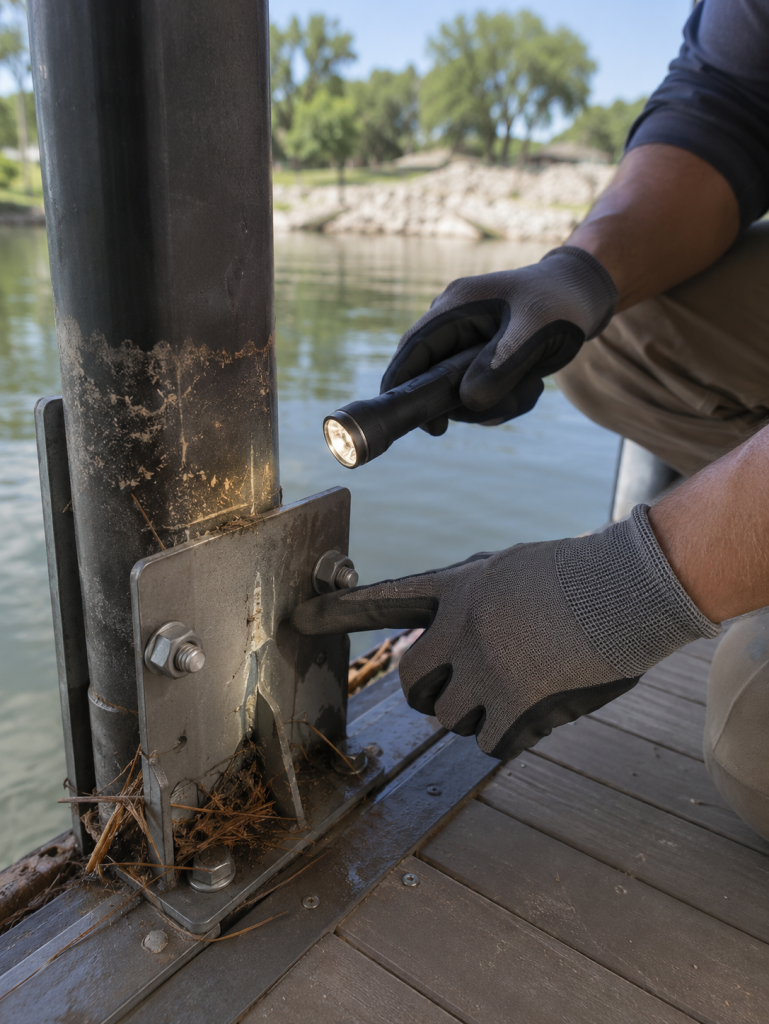
7. Inspect Cleats, Mooring Lines, Bumpers, and Tie-Down Points
Mooring components can experience substantial loads when boats move in high water or strong current. Even if the boat remained secured, the cleats, lines, brackets, and dock framing may have absorbed repeated pulling forces.
Inspect cleats for movement, lifted fasteners, cracked mounting surfaces, or deformation. Replace ropes that are frayed, stretched, cut, or stiff from contamination.
Check bumpers and fenders for torn attachment points or compression damage. Confirm that rollers, guides, and protective edging remain correctly positioned before bringing a boat or personal watercraft back into the slip.
Property owners reviewing their waterfront after flooding may also find opportunities to improve everyday dock protection, storage, lighting, and access. Our guide to Lake LBJ waterfront upgrades explains which improvements provide the most practical long-term value.
8. Look for Shoreline Erosion and Loss of Support
High water can remove soil, gravel, mulch, and smaller shoreline materials from beneath steps, retaining edges, pathways, trees, and waterfront structures.
Walk the shoreline from stable ground and look for newly exposed roots, undercut banks, settled areas, cracks, displaced rock, washed-out pathways, or spaces beneath concrete and stonework.
Shoreline damage deserves attention even when it is not immediately affecting the dock. Once supporting material has been removed, ordinary rain, boat wakes, foot traffic, and gravity may continue enlarging the problem.
Avoid filling significant washouts with loose material before understanding why the area eroded. Contact a qualified shoreline professional to assess water movement and long-term stability rather than simply covering the visible opening.
9. Check the Water Around the Dock Before Swimming or Boating
The water directly around a dock can change after a flood. Sediment may reduce visibility, while branches, metal, displaced equipment, or other objects may settle below the surface.
Do not assume a familiar swimming area has remained unchanged. Look for floating debris, unusual surface movement, displaced markers, damaged buoys, oily residue, strong odors, or objects protruding from the water.
Wait until conditions are appropriate before swimming, launching watercraft, or allowing pets into the lake. Avoid areas where the water appears unusually murky, stagnant, discolored, contaminated, or affected by active current.
For current lake levels, floodgate operations, and system-wide conditions, consult the LCRA flood information page before making decisions based only on what you see from your property.
10. Document Changes and Recheck the Property
Photograph the dock, shoreline, boat lift, access points, and visible equipment during the first inspection. Take wide photographs that show alignment as well as close-up images of hardware, scrape marks, movement, erosion, and debris impact.
Documentation creates a useful reference if a problem becomes more noticeable later. It may also help a service provider understand what changed and determine which areas need closer inspection.
Recheck the property after debris is removed and normal lake activity resumes. Some problems become easier to identify once the structure is exposed to ordinary wind, wakes, boat movement, and repeated use.
Signs That Warrant Professional Attention
Stop using the affected area and contact the appropriate qualified professional when you notice any of the following:
- A dock, gangway, roofline, or boat lift that is no longer level
- Movement around pilings or structural connections
- Bent, cracked, displaced, or missing hardware
- A boat lift that operates unevenly or makes unfamiliar sounds
- Electrical components exposed to water or physical damage
- Large or submerged debris lodged beneath the dock
- Loose ladders, steps, handrails, cleats, or access systems
- Shoreline erosion affecting walkways or waterfront structures
- Any condition that makes you question whether the dock is safe
Do not wait for a small change to become an obvious failure. Addressing loosened hardware, damaged protection systems, unstable access points, and maintenance problems early can reduce risk and help protect the long-term usefulness of the waterfront.
Prepare the Waterfront for the Next High-Water Event
A post-flood inspection is also an opportunity to identify weaknesses before the next major rainfall event.
Better cleats, correctly positioned bumpers, organized dock storage, secure equipment, reliable lighting, improved access systems, and properly maintained waterfront components can make the property easier to protect and recover.
Because every waterfront is exposed differently, the right improvements depend on the dock layout, shoreline, prevailing wind, water depth, boat traffic, equipment, and how the property is used.
Highland Waterfront Services helps Lake LBJ, Inks Lake, Lake Marble Falls, and Lake Buchanan property owners with non-structural access accessories, dock lighting products, boat and personal-watercraft protection, water-movement equipment, recreation products, and routine waterfront maintenance. Structural, electrical, shoreline-engineering, and flood-damage concerns should be handled by appropriately qualified professionals.
Waterfront Services for Lake LBJ and the Highland Lakes
Highland Waterfront Services works with waterfront property owners throughout Lake LBJ, Inks Lake, Lake Marble Falls, Lake Buchanan, and nearby Highland Lakes communities. We provide practical dock upgrades, access and safety improvements, boat and personal watercraft protection, dock lighting, water-movement solutions, waterfront accessories, and ongoing maintenance support.